Showing posts with label light pollution. Show all posts

February 6, 2017

Pushing for IDA membership

Kelly Beatty thinks more amateur astronomers should be members of the International Dark-Sky Association (IDA), and he puts his money where his mouth is on the issue. Beatty, a senior editor of Sky & Telescope magazine and a board member of the IDA, made an offer to waive his usual fee for speaking at the recent Seattle Astronomical Society banquet if the group could sign up at least ten new or renewing IDA members. At last word they’d added at least a couple of dozen.

Still, Beatty noted at the January 28 banquet that while there are roughly a quarter of a million amateur astronomers in the United States, the IDA has only about 3,000 members.

“That means that roughly one in a hundred amateur astronomers across the U.S. are members of IDA,” Beatty pointed out. “Isn’t that pathetic?”

“What other group has more to gain or lose from the success of the IDA and our dark sky preservation efforts?” he asked.

Beatty
Beatty noted that LED street lighting is a major issue, and one on which regular citizens can help. If your city or town hasn’t converted street lights to LED yet, it probably will soon. LED street lights can be cheaper in a couple of ways. They consume less energy than typical street lights (though this paradoxically can cause a municipality to just buy more light), and the fixtures have a longer expected life span. What is important is that cities use fixtures that are at a color temperature of 3,000 kelvins or less. This provides warmer light with less blue in the spectrum. Blue light brightens the night sky more than any other color of light, and exposure to blue light at night has also been shown to harm human health and endanger wildlife.

Beatty said that the city of Phoenix recently decided to install 2,700-kelvin streetlights, Montreal dropped plans to install lights at 4,000 kelvins, and the entire state of Georgia is going with 3,000-kelvin lights.

“You have the power to make a difference in this fight against light pollution, individually and collectively,” Beatty said. “It’s not that people are opposed to doing the right thing, they just don’t know. It’s an education. So if you inject yourself into the process you can and will make a difference.”

IDA’s page about outdoor lighting basics and its LED practical guide have lots of useful information. Oh, and you can sign-up online. There’s a $15 annual membership for students, and standard memberships start at just $35.

December 3, 2016

Major changes in store at Goldendale Observatory

Big changes are in store at the Goldendale Observatory in Goldendale, Washington. The facility’s telescope, installed in 1973, has already been reconfigured and more improvements are planned. Most of the existing facility, save for the south dome that houses the telescope, will be demolished this winter and replaced with a bigger, more useful observatory that operators hope will be operational in time for the solar eclipse in August.

Troy Carpenter, interpretive specialist at
Goldendale Observatory State Park, spoke
at a recent Rose City Astronomers meeting
about plans for improvements at the
observatory. Photo: Greg Scheiderer.
Troy Carpenter, interpretive specialist at the observatory, talked about the plans at the recent meeting of the Rose City Astronomers in Portland. He said that up until recently the telescope and facility had been virtually unchanged since they opened.

The telescope, originally a 24.5-inch classical Cassegrain built by amateur astronomers from Vancouver, Washington, was reconfigured this summer.

“It is still the same telescope, but it has become a Newtonian,” Carpenter said. “The primary reason this was converted from Cassegrain to Newtonian is because, frankly, a classical Cassegrain telescope is totally inappropriate in Goldendale, Washington.”

The original scope, with an effective focal ratio of f/14.5, had a focal length of more than 9,000 millimeters. For telescopes and cameras, that’s extremely long.

“I would even say excessively long because it means the telescope can only operate at very high orders of magnification,” Carpenter said. That was bad, because the telescope couldn’t really look at large, dim objects like the Andromeda galaxy or Orion nebula. Also the scope required good seeing conditions, and while it’s dark and clear in Goldendale, the seeing at the observatory isn’t typically great. On top of that, the secondary mirror was eight inches wide with a ten-inch baffle that blocked too much light, leading to poor contrast at the eyepiece.

“In short, what we had was a horribly over-magnified image with terrible contrast all the time, and as a result this very impressive-looking telescope became kind of infamous, and not so much famous, for being awful,” Carpenter said. “All of these issues contributed to the decision to convert it to a Newtonian.”

That work, and some other adjustments to the telescope, its mount, and adjustability, were completed in September. Back to a more appropriate 3,050-millimeter focal length, Carpenter said views through the telescope are much better now. An improvement yet to come is replacement of the primary mirror, which has deteriorated over 43 years of use. In addition, the mirror is five inches thick, weighs 200 pounds, and takes four hours to reach thermal equilibrium, which is essential to good viewing.

A replacement is being fashioned by a company in Pennsylvania that has done work for NASA. The new mirror, computer designed and fabricated from inexpensive materials, will be the same width but just two inches thick and will weigh only 35 pounds. It will take just 15 minutes to cool to ambient temperature. They hope to have it in Goldendale and installed within the next few months. Its price tag, with a generous educational discount, is $25,000, and while that may sound like a lot, Carpenter noted a similar-sized mirror made of fused quartz might go for ten times as much, a quarter million.

New observatory

Big changes are in store for the buildings at Goldendale Observatory State Park, too.

Preliminary plans for the new facility
at Goldendale Observatory.
“We’re tearing it down so that a much larger facility can be built in its place,” Carpenter said. Everything except the south dome that houses the telescope will go. The new facility will include a large auditorium for classes and lectures that will seat about 150, interpretive exhibit space, and a rooftop observation deck. The total cost of the improvements, which are being made in several phases, is $5 million, which is being covered by capital funds appropriated by the Washington State Legislature. Demolition is set for this winter and they hope to be operational with the new facility in time for the total solar eclipse on August 21, 2017. While Goldendale won’t be within the path of totality as it was for the 1979 eclipse, the Sun will be about 98 percent obscured at the observatory that day, so it will still be something to look at.

One page detailing the planned improvements is above; you can see more of them in the latest newsletter from Friends of Goldendale Observatory.

Light pollution

While it’s pretty dark in Goldendale, many feel that light pollution has increased in town in recent years. Concerned folks this summer held a Gorge Night Sky Symposium to discuss the situation. (See our recap of the event.) Carpenter raised a few eyebrows in the room, mine included, with his take on the issue.

Goldendale Observatory. Everything but the dome on
the right will be demolished to make way for improved
facilities. Photo: Greg Scheiderer.
“I’m going to surprise you by not being the loudest opponent of the light pollution we have in Goldendale,” he said. He added that he grew up in New York and has lived in Philadelphia, so he knows light pollution.

“I’ve been to places where stars don’t exist,” he said. So while Goldendale has some light pollution, Carpenter noted that they still have great views of lots of faint fuzzies in the dark night sky.

“It’s low on my priority list because it’s a politically charged issue and it makes us very unpopular every time we bring it up,” Carpenter explained. “Our friends group, however, does care very much about light pollution and they do work hard.”

He noted that the town of Goldendale is working on an improved lighting code, and is converting to full cut-off, dimmable LED street light fixtures. Despite some light pollution, Carpenter said it’s still a great place for stargazing.

“You can see the Milky Way from horizon to horizon in Goldendale,” he said, “and that’s a wonderful thing.”

We look forward to a dark, clear future at Goldendale Observatory.

October 16, 2016

Astronomy tourism in Wisconsin

Mention Wisconsin to someone and their first thought might have something to do with cheese, bratwurst, or the Green Bay Packers. I’d suggest adding stargazing to the list after learning of some great resources during a recent trip to Milwaukee. I paid a visit to the Milwaukee Public Museum, where the The Daniel M. Soref National Geographic Dome Theater & Planetarium has just been upgraded to a Digistar 6 computer projection system.

Cool planetarium shows

I saw the museum’s planetarium show titled, “Did An Asteroid Really Kill the Dinosaurs?” It was a visually stunning show that left one feeling that T-Rex and the killer asteroid were actually in the room.

“We produced that, we wrote it, and put it up on the dome, and that’s because we had a big dinosaur exhibit,” explained Bob Bonadurer, director of the theater and planetarium, who added that they create many of their own original programs. He noted that the answer to the question in the show’s title is yes—for now.

“There’s lot of debate about volcanic eruptions possibly contributing to the death of the dinosaurs,” Bonadurer said. “Science always changes with new evidence, and we point that out at the end of the show.”

“Did An Asteroid Really Kill the Dinosaurs?” has since closed, but the planetarium is running two other astronomy-related shows along with its staple “Wisconsin Stargazing,” which looks at what’s up in the sky each month.

Bonadurer said its not all that common to find a planetarium that also has 2D and 3D movies.

“A lot of planetariums stand alone,” he noted. “Our planetarium is part of the big dome theater.”
The recent upgrade has brought even brighter, sharper resolution to the screen.

“With the astronomy software we’ll be able to take the audience on much more engaging trips throughout the cosmos,” Bonadurer said.

Stargazing in Wisconsin

Milwaukee and Wisconsin have active amateur astronomy communities. There are a half dozen astronomy clubs in the greater Milwaukee area, and the Astronomical League lists 14 affiliated clubs in the state.

“Those astronomy clubs are great to work with,” Bonadurer said. “They help us out with events such as eclipses, and, for example, the Mercury transit back in May.”

As with any big city, Milwaukee has problems with light pollution, but Bonadurer said there’s plenty of good stargazing to the north of town. Newport State Park, about 90 miles north-northeast of Green Bay, is a candidate for International Dark-Sky Park status with the International Dark-Sky Association.

“Like any metro area, we tell our planetarium audiences yes, take the drive, 40-50 miles, get away from the street lights,” Bonadurer said. “It’s a tall order, but do it because it’s worth it.”

“Planetarium skies are nice, but they obviously don’t hold a candle to the real sky,” he added. “We want people to get out there under the real sky.”

Total solar eclipse

Next August 21, when a total solar eclipse crosses the United States, Milwaukee will see the Sun obscured by just 85 percent. The Milwaukee Public Museum will offer programs to help people safely view the partial eclipse in town, and is also sponsoring a five-day eclipse road trip to get people into the totality.

Bob Bonadurer. Photo: Twitter.
“We’ve got our hotel rooms booked as a lot of planetariums or astronomers do,” Bonadurer said. “We’re usually on the leading edge of all this in getting the public excited.”

Bonadurer, who has seen four total eclipses of the Sun, will lead the tour, which will be able to take about 110 people to the eclipse.

“This will, I hope, reignite a little passion about eclipses in America, because it’s been a long time,” he said. “It’s the first one to sweep across America in 99 years, because for the one in ’79, only a small portion of America got to see it.”

Yerkes Observatory

Astronomy buffs visiting Wisconsin will also want to check out the historic Yerkes Observatory about 50 miles southwest of Milwaukee in Williams Bay, Wisconsin. The observatory, often called the birthplace of modern astrophysics, was founded by George Ellery Hale and has been the research home of Edwin Hubble and a veritable who’s who of astronomers. Check out our article about a visit to Yerkes during the 2012 Astronomical League Conference.

Bonadurer offers this advice to stargazers in Wisconsin and everywhere:

“Keep looking up, see that eclipse,” he suggests. “Get away from the street lights and enjoy this incredible universe.”

September 29, 2016

Gorge night sky symposium sparks good lighting conversations

A diverse group of night-sky enthusiasts, business people, lighting designers, and government officials gathered last month in Goldendale, Washington and The Dalles, Oregon for a two-day symposium for discussion of measures that might be taken to protect the supremely dark night skies in the Columbia River Gorge. While Seattle Astronomy was unable to attend because of travel, we did speak recently with symposium organizer Jonathan Lewis, who said the event was a big success because it got some great conversations started.

LEDs can be good

The Goldendale Observatory was one of the sites for a
two-day symposium about dark skies in the Columbia
River Gorge. Photo: Greg Scheiderer.
Notably, Lewis said that author Paul Bogard portrayed LED lighting as the enemy during his keynote talk to open the symposium, but participants were able to change some minds.

“By the end of it we realized that the LED technology has a lot of potential to make the dark skies much better if it’s done properly,” Lewis said. “That was really the goal, to get that message out.”

Lewis gave several examples of talks that were learning experiences for symposium attendees. Gary Chittim of a lighting company called PlanLED discussed human-centric lighting that takes into account our circadian rhythms and other factors. LED lighting can be turned down low in the evening and much hotter during the day to mimic the Sun.

“Our relationship with lighting can, with LEDs, mimic a more natural environment, not only at night but also during the day,” Lewis noted.

Another speaker, Rob Leonard of Echelon, demonstrated interesting possibilities for the control of LEDs to provide as much light as needed when it is needed. LEDs can be set to dim at certain hours, and to get brighter only when people move near them. There’s even an app with an emergency button that can allow a person to turn up the lights if they’re concerned they’re being stalked at night.
“Amazing sci-fi stuff that they have available right now,” Lewis said, adding that Echelon is helping to put in controlled lights in Goldendale.

Lighting the ballfield

Sports teams have been among the loudest objectors when strong lighting ordinances are suggested, but Leonard also talked about arena lighting, and said that sports stadia can now be lit more evenly with minimal glare or light trespass.

“All of those things are greatly improved with the newer LED technology that’s available, so a lot of the arguments that sports groups might have against lighting ordinances maybe will go away because of the new technology,” Lewis said.

Building political support

Most of the “right people” attended the symposium, according to Lewis, including officials from Wasco County in Oregon, city commissioners from Hood River, and representatives from Columbia Gorge Scenic Area groups. State Rep. Gina McCabe (R-Goldendale) attended and stated that the attraction of the dark skies is important for tourism in the area.

“She’s definitely a leader in the business community, and having the businesses hear what she had to say and to have that be an important part of her agenda was really important,” Lewis said. He’s hoping McCabe can help engage on some statewide issues. For example, sometimes lighting ordinances aren’t enforced adequately in smaller communities because they don’t have their own electrical inspectors and rely instead on state inspectors through the Department of Labor and Industries. State legislation could allow L&I inspectors to enforce or urge compliance with local ordinances even though they serve different jurisdictions.

“Some conversations like that were able to get started,” Lewis said.

The conversations are continuing, Lewis said. There’s some talk about creating a Gorge-wide dark sky area project, which he called, “a very exciting possibility.” There’s also a movement afoot to start collecting data about light levels in the Gorge. Lewis noted that people who wish to follow these efforts can sign up for newsletters from the Mid-Columbia Economic Development District and the Friends of the Goldendale Observatory.

If you missed the symposium as we did, you’ll find videos of the various presentations below.

Videos of presentations from the dark-sky symposium:


July 22, 2016

Symposium to tackle dark-sky issues in Columbia River Gorge

It’s still really dark at night in Goldendale, Washington. Goldendale Observatory State Park has been designated as an international dark-sky park by the International Dark-Sky Association, and the area sits at the northern end of what is arguably the best stretch of good, dark, night sky left in the United States, running south through eastern Oregon and even into northern Nevada and California.

“We’re really blessed with dark skies,” said Jonathan Lewis, a board member of the Goldendale Chamber of Commerce who heads up the renewable energy division for Hire Electric in The Dalles, Oregon. “People buy property out here so they can see the Milky Way.”

“We’re close enough to Seattle and Portland that it makes it practical for people to come out here just to enjoy the night sky,” Lewis added.

That sky needs some maintenance.

Threats to the night sky

The Goldendale Observatory State Park sits on a bluff
above the city and has a spectacular view of Mt. Hood.
A symposium aimed at preserving dark skies in the Columbia
Gorge will be held in Goldendale and The Dalles Aug. 18-19.
Photo: Greg Scheiderer.
“We’re realizing that the night sky, even in our rural communities, is in danger with the rapid deployment of LED technology, primarily,” Lewis noted. “It’s just getting cheaper and cheaper to do brighter and brighter lights.”

Brighter is not better. The City of Goldendale is in the process of revamping its lighting ordinance, and will soon be upgrading its street lighting. As discussions occurred, Lewis sensed that the lighting people and the lovers of dark night skies were not always on the same page.

“Out of all of that, this idea for a symposium to get the lighting industry professionals and the astronomy folks together in the same place to talk about challenges and ways to make this all happen came about,” Lewis said.

The Gorge Night Sky Symposium

The Goldendale Area Chamber of Commerce, Friends of Goldendale Observatory, and the Mid-Columbia Economic Development District are organizing the Gorge Night Sky Symposium, which will be held August 18-19, 2016, at the Goldendale Observatory State Park and at the Columbia Gorge Discovery Center in The Dalles. The event has also received a significant sponsorship grant from Google, which operates a data center in The Dalles, as well as from a variety of other supporters.

The symposium session Thursday, August 18 at the observatory will feature food and drink as well as a keynote talk from Paul Bogard, dark-sky activist and author of The End of Night: Searching for Natural Darkness in an Age of Artificial Light (Little, Brown, 2013). The Friday sessions at the Discovery Center will include a presentation by David Ingram, chair of Dark Skies Northwest, the regional chapter of the IDA. There will also be talks about how bad lighting effects wildlife. The afternoon will include working groups about lighting technology, ordinance making, and lighting incentive programs and how to make them work to encourage people to choose dark-sky compliant fixtures.

The symposium has already attracted a pretty thorough list of decision makers, operators of major businesses in the Gorge, and energy services staff from area utilities. Lewis figures this gives them a good chance to reach their goals for the symposium:

“To heighten the awareness, so that when people are out talking in their community or encouraging people to upgrade in their lighting, they add the dark-sky piece to it,” he said, and, “To make it hard for people to buy non-dark-sky-compliant lighting in the Gorge.”

Lighting history in Goldendale

There’s a bit of irony in the notion that this effort has to happen in Goldendale. Amateur astronomers from Vancouver, Washington built the observatory’s primary telescope, a 24 1/2-inch instrument, in the early 1970s. They donated it to the city under the stipulation that it enact a lighting ordinance.
“Goldendale really had one of the first lighting ordinances” in the state, said Lewis, but it’s a bit out of date. “It was based on high-pressure sodium, full shielding, very different technologies.”

On top of that, enforcement of the existing code has been inconsistent at best.

“The lighting has gone sideways a little bit,” Lewis said. “Now, as people are looking to retrofit, we’d like to get a handle on that.”

A good dark sky at night is important to Goldendale, because astronomy tourism has become significant for the local economy. Upwards of 20,000 visitors stop in at the observatory each year, and many astronomy clubs hold observing events in the area.

“The key piece for the Goldendale Chamber of Commerce in our tourism strategy is to get more people to this observatory,” Lewis said. “It’s very important.”

Improvements at the observatory

Wind power turbines line the horizon as seen from Goldendale
Observatory State Park. Photo: Greg Scheiderer.
Lewis noted that there have been positive changes at the observatory of late. Recently hired staff have been an improvement, and the state will invest about $6 million in the park over the next four years. That will pay for refurbishing the main telescope, one of the largest public scopes in operation. The work will essentially bring it up to research grade. They’ll also remodel the facility to include a bigger meeting room and auditorium.

“It’s very exciting what the state parks are doing with this observatory,” Lewis said.

If you would like to attend the symposium, you can register online through the Mid Columbia Economic Development District. The fee for the full symposium is just $55, and there are one-day sessions available as well.

More information:

March 24, 2016

Light pollution measure expected to win governor's approval

Washington Gov. Jay Inslee is expected to sign a supplemental state transportation budget tomorrow that includes what may well be the first ever mention of light pollution to make it into state code. The transportation budget may seem an odd place for such policy matters to be considered, but state Rep. Jessyn Farrell (D-Seattle) found an opportunity there.

Rep. Jessyn Farrell
“The Department of Transportation, which has jurisdiction over a lot of facilities with a lot of light across the state, has some federal dollars to do a study on the impacts of light to night driving and vision,” Farrell told Seattle Astronomy. “I thought as long as they’re looking at the impacts of light on vision, why don’t we also look at the impacts on light pollution?”

Farrell had that directive inserted into the budget as a proviso—see our story from Tuesday for the exact language—and the governor has told her he will sign it.

(UPDATE: Gov. Inslee did, in fact, sign the bill, including the light-pollution language, on March 25, 2016.)

“A huge thank-you to Gov. Inslee,” Farrell said. “He is, as we all know, a great environmentalist. He cares a lot about the night sky and said that specifically when we spoke about this proviso. I’m very pleased that he’s going to sign the supplemental budget with this proviso in it.”

“I care about a visible night sky, so this is important,” she said.

As a proviso in the supplemental budget, it will only be in effect for about a year. Farrell said she plans to work next year on getting the department to make an on-going commitment to considering light pollution in its planning and operations. She said it might not even take legislation, but that the department could be convinced to make such considerations of its own accord.

Gov. Jay Inslee
“It seems like a straight-forward thing, and I’m surprised they don’t already have policies around light pollution,” she said, “but my hope is that ultimately this will allow them to start making different decisions around how they light their road facilities across the state.”

Farrell sponsored a bill this year to have the state Department of Ecology do a comprehensive study of the effects of light pollution and to make policy recommendations for reducing it. While the bill received a hearing, it did not win approval from the House Environment Committee. Farrell said cost was the main hangup. The legislature has been ruled in contempt of court over education funding, and is still in special session trying to wrap up the operating budget, which is under a great deal of strain.

“There was a great concern in doing anything that was perceived as extra in the general operating budget this session,” she said. She saw the DOT funding as a way to make some progress without making it a budget issue.

Farrell said she has long been interested in the night sky, and remembers not having to go very far to see things like the Perseid meteor shower.

“It is really a lot harder to see even really visible events like that, and I think that what’s interesting about light pollution is that its really something that we can address,” she said. She credited the amateur astronomy community for stepping up, noting that it was a constituent, David Dorais, who raised the issue at a community forum and spurred her to action.

“A lot of people care about this issue, so to be present at community forums and raise it and help educate the public that there are things that can be done, I think that’s really important,” Farrell said. “As we work through the various political processes at the different levels of government, having you present really matters.”

“This is only a first step,” she said. “There’s so much work that we can continue to do and I look forward to working with you.”

January 13, 2016

State House committee considers curb of light pollution

Rep. Jessyn Farrell
When a bill aimed at curbing light pollution in the State of Washington received a hearing before the House Environment Committee yesterday in Olympia it was the first formal discussion of the topic at the state level in seven years. House Bill 2057 would direct the state Department of Ecology to assess the environmental, economic, and public health effects of light pollution, and to submit the study and policy recommendations for reducing light pollution to the Legislature by next January.

Rep. Jessyn Farrell, D-Seattle, is the prime sponsor of the legislation.

“This is a really important issue,” Farrell said. “There are lots of studies that do show that there is an impact on human health, the natural environment, property values” from light pollution. “The goal here is to study this and see what the current state of that research is.”

Amateur astronomers testify

Farrell said the issue was brought to her by a constituent, David Dorais, who in testimony before the committee described himself as, “a former traffic engineer who knows something about outdoor lighting, especially for street use and safety. As a lifelong amateur astronomer I also know something about how we can do a much better job of illuminating those places throughout the state that need the banishment of the dark.”

L-R: David Dorais, Qiu Min Ji, and David Ingram testified
in favor of HB 2057 at a hearing of the state House
 Environment Committee on Jan. 12, 2016. Photo: Greg Scheiderer.
David Ingram, a volunteer who heads up Dark Skies Northwest, the local chapter of the International Dark-Sky Association, called the night sky a natural resource and a wonderment.

“It has inspired architecture, religion, philosophy, science and technology,” Ingram testified. “I don’t know how our young people are going to be similarly inspired if more than half of them don’t even have a contact with the night sky.”

“It’s of vital importance that we look at the question of what happens to the soul of men and women when they’re removed from contact with the night sky,” Ingram said. He added that he doesn’t want to go back to the dark ages, but believes we have the technology to use light to enhance safety, wayfinding, and commerce efficiently and effectively, without blotting out all of the stars in the process.

Amendments likely

There will probably be some changes to the bill before the committee votes on it. Jessica Archer, who is with the scientific arm of the Department of Ecology, suggested that the departments of Health, Fish and Wildlife, and Commerce be brought in on the study, as Ecology lacks the expertise to weigh in on light pollution’s impact on animals, human health, or property values. Archer also suggested that the scope of the study be more clearly spelled out, which will also help them determine the cost of the effort. Farrell said that she might seek to add potential cost savings to the scope of the study. It’s also possible that the deadline for the study will be pushed out; the due date of January 1, 2017 was set when the bill was first drafted last year.

Farrell noted that HB 2057 takes a far more cautious approach than did fairly comprehensive and directive light pollution legislation that was considered in 2008 and 2009. Mark Johnson, representing the Washington Retail Association, testified that his organization wanted to make sure that any consideration of light pollution didn’t have an adverse impact on safety or business. That’s a reason why Farrell went with a deliberate approach.

“I think we should study this and see if there’s further action that we should take,” she said.

Next steps

The bill must gain the approval of the committee by Feb. 5 if it is to come up for a vote in by the entire House. Our hunch is that the supporters have a good chance to accomplish that. The committee chair, Rep. Joe Fitzgibbon, D-Seattle, is a co-sponsor of the bill. Another member of the committee, Rep. Joan McBride, D-Kirkland, was involved in improving lighting ordinances when she was mayor of that city.

Interested people who were unable to attend Tuesday’s hearing can testify about the bill online. This makes a difference. Write today!

More information:

January 11, 2016

Light pollution study measure to receive hearing before WA legislature

A bill that would direct the Washington State Department of Ecology to recommend ways to reduce light pollution in the state is scheduled to receive a hearing tomorrow before the House Environment Committee. The measure, HB 2057, directs the department to complete a study of the environmental, economic, and public health effects of light pollution, and to submit the study and policy recommendations for reducing light pollution to the Legislature by next January. The hearing is scheduled to begin at 1:30 p.m. Jan. 12 in House Hearing Room B in the John L. O’Brien building on the state capitol campus in Olympia.

Rep. Jessyn Farrell of Seattle is the prime sponsor
of a bill calling for a study of light pollution in Washington.
State Rep. Jessyn Farrell (D-Seattle) is the prime sponsor of the bill. It was introduced in February of last year but never received a hearing. Farrell told us at that time that she feels light pollution is an “important issue,” but that “it’s going to take some time and education to get movement.” She vowed to bring the bill back this session and has made good on that promise.

It’s a good sign that the measure is being heard on the second day of the 60-day session of the Legislature. The timeline is short; the bill will have to be approved by the committee by Feb. 5 to be eligible for further consideration by the full House of Representatives.

It’s also a good sign that the chair of the committee, Rep. Joe Fitzgibbon (D-Seattle), is a  co-sponsor of the bill.

Those unable to attend the hearing in person can comment online using a form on the Legislature’s website. Seattle Astronomy plans to attend the hearing and will keep you posted about the progress of this important legislation.

More information:

February 24, 2015

Sponsor will try again next year on light pollution study

We reported yesterday that a proposal to do a study of light pollution in the state of Washington was dead for this year’s session of the state Legislature. The prime sponsor of the measure says she plans to try again next year.

Rep. Jessyn Farrell of Seattle is the prime sponsor
of a bill calling for a study of light pollution
in Washington. Though the proposal is tabled for this
year, she plans to try again in 2016.
“I think this is an important issue,” wrote state Rep. Jessyn Farrell in an email to Seattle Astronomy, “but it’s going to take some time and education to get movement.”

Farrell’s bill is HB 2057, which was formally introduced Feb. 10 but did not receive a hearing or vote in the House Environment Committee. Last Friday was the deadline by which bills had to earn committee approval in order to remain eligible for further consideration this year.

The bill is just over one page in length, and simply would have directed the state Department of Ecology to “analyze the current extent of light pollution that adversely affects the quality of the environment, the value of property, and the health and well-being of the public,” and to recommend solutions to the problem. Though it didn’t get much consideration this year, we believe it is the first time the subject of light pollution has been raised in six years. Our post about the introduction of the measure includes a bit of history of the debate in Olympia.

The International Dark-sky Association and its local chapter Dark Skies Northwest are aware of the measure, and with lead time may be able to help provide some of the education Rep. Farrell believes is needed. In the meantime the astronomy community can help raise awareness by contacting legislators to support the bill in particular and curbs on light pollution in general.

February 23, 2015

Proposal to study light pollution switched off

Less than two weeks after it was formally introduced in the Washington State House of Representatives, a bill that would have directed the state Department of Ecology to study light pollution and recommend possible remedies appears to be off the table for this year’s session.

Rep. Joe Fitzgibbon, chair of the state House
Environment Committee, did not schedule a
hearing on the light-pollution study bill.
The measure, HB 2057 sponsored by Rep. Jessyn Farrell of north Seattle, was referred to the House Environment Committee, but did not receive a hearing. Last Friday, February 20, was the Legislature’s self-imposed deadline for having bills out of committee if they are to be eligible for further consideration.

While the bill may be dead the idea is not necessarily so. Occasionally, bills can be revived through parliamentary procedures, or they can be amended onto other measures, though neither of those possibilities seem likely in this case. The directive could be attached as a proviso to the Department of Ecology budget. Were that to happen, we would not likely know about it until the budget proposals start coming out in a month or so.

If nothing happens for the rest of this year’s session, the bill will be automatically re-introduced again for the 2016 legislative session, though the timeline for the study would likely be pushed back a year as well if the measure is considered at that time.

It is difficult to gauge how serious the effort is to take a close look at light pollution in the state. Neither the prime sponsor of the bill, Rep. Farrell, nor the Environment Committee chair, Rep. Joe Fitzgibbon of West Seattle, have responded to Seattle Astronomy’s requests for information.

We will keep you posted if we learn more.

February 10, 2015

Washington Legislature considering study of light pollution

Rep. Jessyn Farrell of Seattle is the prime 
sponsor of a bill calling for a study of light 
pollution in Washington.
A bill has been introduced in the Washington State House of Representatives that would direct the state Department of Ecology to conduct a study of light pollution in the state and to make recommendations for reducing it.

The measure, HB 2057, is sponsored by Rep. Jessyn Farrell, a Democrat from Seattle. It has been referred to the House Environment committee, the chair of which, Democratic Rep. Joe Fitzgibbon of West Seattle, is a co-sponsor of the bill.

The bill is a simple one, just over a page long. It directs the department to “analyze the current extent of light pollution that adversely affects the quality of the environment, the value of property, and the health and well-being of the public.” It specifies that the study must evaluate, at a minimum:
  • The risks to public health, well-being, and the environment posed by light pollution
  • The locations in the state with the greatest prevalence of light pollution and the greatest impacts of light pollution on environmental quality, ecosystem function, and public well-being
  • Policy options for addressing light pollution that have been adopted by other jurisdictions
The department would be required to report the results of the study back to the Legislature by Jan. 1, 2017, and include recommendations for policy changes to address light pollution.

This is the first legislative look at light pollution in the state in six years. Rep. Pat Lantz, a Gig Harbor Democrat who has since retired from the Legislature, introduced a far-reaching light pollution statute in 2008, and Rep. Sam Hunt, D-Olympia, proposed a similar measure the following year. The latter earned committee approval in 2009 but never came to a vote in the House of Representatives. The earlier measures would have required that all new lighting be fully shielded, and would have banned the sale and use of mercury vapor lights, among other considerations. It had strong support within the astronomy and environmental communities, but drew opposition from a variety of developers, sports teams, billboard operators, and gas stations. The state Department of Transportation warned that the cost of bringing highway lighting up to the new code would have been prohibitive.

The Legislature’s website includes the text of HB 2057 as well as the capability to comment online. Seattle Astronomy will continue to follow the measure, which must gain committee approval by Feb. 20 if it is to be eligible for continued consideration this year.

February 9, 2014

Half the park is after dark

Tyler Nordgren wears many hats: astronomy professor, author, artist, photographer, national park curriculum designer, and night-sky ambassador. The author of Stars Above, Earth Below: A Guide to Astronomy in the National Parks was the keynote speaker at the recent annual banquet of the Seattle Astronomical Society.
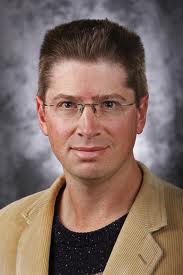
Tyler Nordgren
Nordgren, a professor of astronomy and physics at the University of Redlands in California, pegs his early interest in astronomy to his suburban-Portland grade school principal, who happened to be the uncle of astronaut Bonnie Dunbar. Mr. Dunbar used his connections to bring NASA folks to the school for talks. Nordgren decided then that he wanted to be an astronaut, too. Then he was amazed by Carl Sagan’s TV series.

“When I saw Cosmos I realized why I wanted to be an astronaut, or if not an astronaut, to be an astronomer,” Nordgren said.

Coincidentally, Nordgren attended graduate school at Cornell University when Sagan was on the faculty. He never took a class from Sagan, but in one of his first teaching gigs Jeremy Sagan, Carl’s son, was in Nordgren’s class. He said Jeremy sat in the front row, asked a lot of questions, and then talked over the lectures with his famous dad. No pressure there.

“I learned to be on my toes!” Nordgren joked.

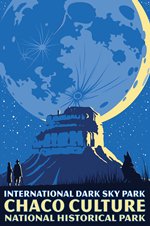
Nordgren’s posters like this one for
Chaco Culture National Historical Park
help call attention to the importance
of dark night skies in the parks.
A couple of events inspired Nordgren’s work in the national parks, which includes marvelous photography and a series of travel posters based on the style of the 1930s WPA graphics. The first was a visit to Palomar Observatory.

“My very first telescope was an eight-inch Celestron my father bought for me when I graduated from college,” Nordgren recalled. “My second telescope was the Palomar 200-inch” which he used in research about dark matter in spiral galaxies. When he returned 10 years later he was taken aback by the increased light pollution fueled by a housing boom in the area.

“It had been like a tidal wave of light had just swept out around the mountain,” he said. “It was stunning just how bad the skies now were at Palomar.”

Shortly after that trip, Nordgren celebrated gaining tenure by taking a trip to Yosemite National Park and attended an evening ranger talk about astronomy.

“For many, many people this was the first time they had seen a night sky, a truly pristine night sky,” Nordgren marveled.

He decided to spend an upcoming sabbatical in the National Park system helping rangers develop programs for park visitors to experience the night sky. He spent time in a dozen different parks over the course of 14 months, and came to realize that the preservation of the land that prevents development in the parks also, almost by accident, preserves the precious resource of truly dark skies. It’s a growing part of the appeal of the parks, articulated by the slogan “Half the park is after dark.”

“In those parks that offer night-sky programs the attendance they have is equal to if not better than the next two types of programs added together,” Nordgren noted. “Far and away these are the most popular ranger programs that are offered.”

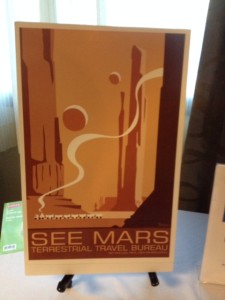
Nordgren's Mars poster
Much of Nordgren’s work is to link what people can see in the sky to what they see in the national parks. For example, he compares Mars to parks in the American Southwest; both Earth and the Red Planet have similar geology and chemistry. Yellowstone National Park has numerous geysers, similar to those on Saturn’s icy moon Enceladus.

One of Nordgren’s favorite parks is the Chaco Culture National Historical Park in New Mexico, which was recognized last year as an International Dark Sky Park by the International Dark-Sky Association. He noted that many of the ancient structures there serve as astronomical markers ala Stonehenge.

“People paid attention to the sky, people have been doing that for centuries, millennia,” Nordgren said. “Unfortunately we’ve made it tremendously difficult to keep doing that.”

As evidence he showed a photo of the sky above Chaco, which is still impressively dark and starry, but all around light pollution is encroaching from the cities of Gallup, Crownpoint, Albuquerque, and a nearby coal mine. Thus a big part of his aim is to get communities near the parks to recognize that the night sky is an attraction, and to encourage them to be good stewards of the dark sky. His spiel goes just as well for any city, regardless of its proximity to a national park.

“All that light that shines above the horizon doesn’t do anything useful,” Nordgren said. “So why are we lighting up the sky? There is nothing we need fear up there, so why are we paying for that light? Why are we generating that light? Why are we burning the natural resources to create that light?”

There really aren’t great answers to those questions, and Nordgren said the solutions are within reach.

“This can be a win-win situation for all of us,” he said. “We can get the stars back, we can save money, we can save natural resources. It really doesn’t have to be stars versus safety.”

Check out Nordgren’s posters and other artwork on his website.

November 10, 2013

Amateur astronomers ID mysterious bright object in COS skies

“When in doubt, call an amateur.”

This may not be good advice for neurosurgery or airline piloting, but it was just the ticket for identifying a mysterious, bright object in the early evening skies over Colorado Springs. While visiting family in Springs they shared with me an article in Saturday’s Colorado Springs Gazette, prompted by an email from a reader who had spotted said object for several days running and urged the paper to investigate, insisting adamantly that “it is not the planet Venus.”

Reporter Tom Roeder consulted local Navy and Air Force experts on flying things as well as an astronomer from the University of Colorado. Two of the three figured it was Venus, but demurred from making definitive statements to that effect because identifying strange, bright objects isn’t necessarily squarely within their bailiwicks.

As people who know them recognize, amateur astronomers have no such reservations. Roeder called Alan Gorski of the Colorado Springs Astronomical Society, who, after a little double checking, confirmed that the bright light is Venus, despite the assessment by the Gazette reader.

When my mother-in-law mentioned the article I, too, immediately concluded it is Venus. Readers occasionally write Seattle Astronomy with what-is-it questions, and it’s almost always either Venus or Jupiter. The King of Planets is also up in the evening these days, rising in the eastern sky a bit before 8:30 p.m. It was a nice sight shining in mostly clear skies last night.

Colorado Springs has some good potential for stargazing, as it is at just over 6,000 feet in elevation and has some pretty clear horizons, especially to the east. But alas, with a population of more than 430,000 the light pollution in the city, while not quite so bad as our home base in West Seattle, is pretty robust. The Colorado Springs Astronomical Society owns a dark-sky observing site near the town of Gardner, Colorado, a little over 100 miles south of The Springs and closest to the city of Walsenberg. The site is home to the annual Rocky Mountain Star Stare.

October 12, 2013

The End of Night

Paul Bogard laments the loss of the beauty of the stars and the night sky.

“Walking out of your door and seeing the Milky Way for ever was one of the most common human experiences, and now it’s become one of the most rare human experiences,” said Bogard, author of The End of Night: Searching for Natural Darkness in an Age of Artificial Light. “Estimates are now that eight of 10 kids born in the United States will never live where they can see the Milky Way” because of light pollution.

“There’s been a real switch and, I think, with great cost,” Bogard said during a talk this week at Town Hall Seattle.

Author Paul Bogard spoke about The End of
Night
at Town Hall Seattle on Oct. 8, 2013.
Photo: Greg Scheiderer.
Bogard, an English professor at James Madison University, first got interested in the stars as a kid. He grew up in Minneapolis and his family had a lake cabin in Northern Minnesota, where he spent summer nights looking up.

“Year after year of seeing that night sky in the summer made a lasting impact on me,” he said.

Even more impressive was a post-college backpacking trip in the Atlas Mountains in Morocco, where he described a night sky so dark it was like a dream; the millions of stars looked like a snowstorm.

“I felt open to everything, as though I was made of clay and the world was imprinting upon me its breathtaking beauty,” Bogard read from the book. “Standing nearly naked under that Moroccan sky, skin against the air, the dark, the stars, the night pressed its impression and my life-long connection was sealed.”

Much of The End of Night relates Bogard’s experiences visiting the brightest and the darkest places we can get to, sometimes within hours of each other, such as the time he drove from the bright lights of Las Vegas to the pitch dark of Great Basin National Park in Eastern Nevada.

During the talk Bogard shared the familiar photo of the Earth at night, and observed that it’s a beautiful image, but that he doesn’t like what it depicts.

“What we’re seeing here is waste,” he said. “Nearly all of the light we see here is shining up in to the sky, it’s wasted, it’s not doing anybody any good.”

The End of Night
While the loss of the splendor of the night sky is terrible, Bogard noted that the other effects of light pollution may be more compelling reasons to do something, from a public policy standpoint. Poor lighting can actually reduce safety and security, and it harms wildlife. He also said there’s growing evidence of light pollution’s health effects on humans. Our sleep is disrupted and our circadian rhythms confused, and bright nights impede our production of melatonin, which could lead to breast and prostate cancer. In fact, Bogard noted that the World Health Organization now considers working the night shift to be a possible carcinogen.

He praised the work of the International Dark-sky Association; the chair of its local chapter, David Ingram, was part of the audience at the talk. Bogard hopes The End of Night inspires a better approach to night lighting.

“What I was trying to do with the book is to raise awareness about the issue,” he said. “Once people become aware of the beauty that we’re talking about, what we’re losing, the threats of light pollution, I think most people will realize that we can do a better job of lighting the night or leaving some of it dark.”

March 2, 2013

Digital billboard proposal unplugged

It appears that a pair of proposals that would have allowed the spread of digital electronic billboards in the State of Washington have been tabled for this year. Both proposals—House Bill 1408 and Senate Bill 5304—received hearings in their respective chambers’ transportation committees Feb. 5. However neither committee took action on the bills by the Legislature’s self-imposed deadline this week, and thus the measures are not technically eligible for further consideration.

There are some billboards like these along Washington highways,
 notably on tribal land along I-5 in Fife. A proposal in the state
 Legislature to allow further use of the signs appears dead
for this year’s session.
The story is not necessarily over. Ideas that don’t survive the committee process can be added as amendments to other bills later in the session, parliamentary maneuvering can sometimes revive a bill that is considered dead, and those “necessary to implement the budget” are typically exempt from these cutoff dates. If they don’t resurface during this year’s legislative session, which runs through April 28, both bills could be considered again when the Legislature reconvenes next January. It should be noted that similar legislation was considered but never enacted last year. Outdoor advertising companies are likely to continue to push for the signs.

The astronomy community stepped up in opposition to these measures on the grounds that they would contribute to increases in light pollution. Others made the points that the signs can distract motorists and are generally unsightly. David Ingram of Dark Skies Northwest,  the regional chapter of the International Dark-Sky Association, testified at the hearings. Many astronomy clubs urged their members to send messages in opposition to the bills on their own or through the advocacy site Keep Washington Beautiful.org.

Seattle Astronomy will keep an eye out for further activity on these proposals.

February 12, 2013

Washington Legislature considers measure to allow more digitalbillboards

The Washington State Legislature is considering measures that have the local astronomy community concerned about the potential of increased light pollution in the state. Senate Bill 5304 and an identical companion House Bill 1408 would change the law to give cities and towns in the state the option to allow electronic billboards within their boundaries.

Both bills received hearings Feb. 5 and must be voted on by committees in the next few weeks for the proposal to have a chance to become law. The House Transportation Committee has a deadline of Feb. 22 to take action on HB 1408, while the Senate Transportation Committee has until March 1 to consider SB 5304.

Proponents of the bill–mainly Clear Channel Outdoor Seattle, the billboard company–touted the traffic safety and amber alert messages that could be given via the billboards, as well as support the company could offer through billboard advertisements on behalf of nonprofit enterprises. Meanwhile opponents contended the billboards would be unsightly and create a distraction for motorists.

David Ingram of Dark Skies Northwest spoke on behalf of the astronomy community, raising concern about the light pollution that the electronic billboards would cause, and also alluding to ill effects of nighttime lighting on human health and wildlife.

July 11, 2012

Dispatch from Chicago: ALCon, day 4

The fourth and final day of ALCon 2012 in Chicago was a fun end to what was a good event.
There were no field trips on this final day, after outings to the Field Museum, Adler Planetarium, Fermilab, and Yerkes Observatory during the first three days of the Astronomical League conference. Many attendees, including yours truly, had grown a little road weary and were happy to have a day devoted to events in the friendly confines of the Marriott Resort in Lincolnshire, Illinois, home base for ALCon.

An iPhone shot taken in a dark room doesn't do much justice to the
righteous Astronomy Magazine Blues Band, which played a couple
of boffo sets bracketing the banquet and awards ceremony at the
annual conference of the Astronomical League July 7 in
Lincolnshire, Illinois.
Morning sessions focused on a variety of observing techniques, and the afternoon was devoted to an excellent, if lengthy, discussion of various aspects of light pollution. This was the general theme of the conference—the theme was “Celebrate Starlight”—and talks were given by International Dark-Sky Association co-founder David Crawford, Sue Bennett from Dark-Sky park Indiana Dunes National Lakeshore, Audrey Fischer, the conference co-chair and founder of One Star at a Time, and several experts who talked about the latest research on the proven or suspected health effects of excessive night-time lighting.

That’s all well and good, but I was most looking forward to the session that drew me to the conference in the first place: a couple of sets from the Astronomy Magazine Blues Band! The band featured Steve Kryscio, Keith Bauer, Jeff Felbab, Mike Soliday, Ron Kovach, and was anchored by drummer and Astronomy magazine editor Dave Eicher. The band played before and after the banquet and awards ceremony, and they rocked it! The pre-dinner set included some rock classics: The Credence standards “Born on the Bayou” and “Green River,” Cream/Clapton tunes “Sunshine of Your Love” and “White Room”, The Who’s “Squeeze Box”, the Band’s “The Weight”, and the Hendrix tune “Voodoo Chile”.

A second set after the banquet featured vocals by Wisconsin’s Megan Bobo, a former “American Idol” contestant, and included the blues standard “Key to the Highway,” Stevie Wonder’s “Superstition”, “Voodoo Woman”, Blind Willie McTell’s “Statesboro Blues”, and B.B. King’s “The Thrill is Gone.”

The drum kit for the out-of-this-world Astronomy 
Magazine Blues Band. Can you name that galaxy?
Ironically, after that tune the band was gone, as hotel brass came around and said it was time for some quiet time. I’m sad to report that, as excellent as the band was, it was not universally well-received. Though it was a visibly advertised part of the conference, some attendees seemed distressed by the live music. Seattle Astronomy enjoyed it a lot.

All in all the conference was great, but the snafu about the music was emblematic of some of the logistical glitches that marred the conference somewhat. It has to be difficult getting a couple of hundred people from place to place, but one can’t help but think it could have gone more smoothly, and that the outstanding Astronomy Magazine Blues Band would have received the rousing reception it deserved.

Next year’s Astronomical League conference will be held in Atlanta. They’ll have to put together quite a program to lure Seattle Astronomy down to Georgia.

October 26, 2011

MLO intro in Seattle

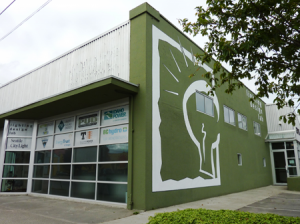
A promising new weapon against light pollution will receive a formal introduction at an event in Seattle Wednesday. Nancy Clanton, a board member of the International Dark-Sky Association (IDA) and member of the Illuminating Engineering Society of North America (IES), will present a workshop about the Model Lighting Ordinance (MLO) at 10 a.m. October 26 at the Lighting Design Lab, located at 2915 Fourth Avenue South in Seattle.

A workshop on the IDA/IES Model Lighting Ordinance
will be held Oct. 26 at the Lighting Design Lab in Seattle.
A task force of the IDA and the IES spent seven years hammering out the details of the model lighting ordinance. It is intended as a guide for environmentally responsible outdoor lighting, and was designed to help municipalities develop outdoor lighting standards that reduce glare, light trespass, and skyglow.

Clanton, who co-chaired the task force, says the process took so long in part because the two organizations started with different sets of goals.

“It wasn’t even a compromise,” she said of the final version of the MLO approved this summer. “We actually blended the goals together and got a really good ordinance that addresses everyone’s concerns.”

The stars aligned to bring this rollout of the MLO to Seattle, according to Scott Kardel, public affairs director for the IDA.

“We’ve chosen Seattle to be the first site partly because Seattle and the Pacific Northwest is a progressive, happening area where people are interested in things like energy conservation,” Kardel said. “Also we have a very active chapter of the IDA, Dark Skies Northwest. It’s a good combination of being able to have our local chapter involved in promoting the event but in an area where we think it has a good chance to have good reception.”

Clanton said the four-hour workshop will give participants a lot of good information about the MLO.

“Here’s what it is, here’s how it was developed, and let us show you some examples of how it could be applied,” was her quick outline of the agenda. “It’s going to be an introduction, answering questions about the different parts of the MLO, and an encouragement for people to bring it to their cities and communities and start looking at adoption.” She noted that the workshop would be useful for city planners as well as for interested advocates who want to learn how to bring better lighting ordinances to their communities.

Clanton said that the city of Plymouth, Minnesota adopted an early version of the Model Lighting Ordinance, which was a big help as they worked through the process. Now Anchorage may be about ready to go to work on adopting the version approved this summer. Both she and Kardel noted that often cities will plow ahead on their own with lighting ordinances, using information from the IDA website, but not telling anyone or availing themselves of the association’s technical expertise. Clanton added that the MLO is not a product that’s ready to adopt off the shelf, but more of a template.

“The model lighting ordinance is supposed to be the technical part of a standard lighting ordinance,” she said, adding that they’ve included placeholder language for intent and the like, but that each community should customize the MLO based on its particular needs. “We had to write this ordinance as if it were a small village or New York City.”

Sky glow is a big deal in Tucson, with Kitt Peak, Mount Lemmon, and Mount Graham observatories in the neighborhood. Kardel said that Tucson, also home base to the IDA, is a prime example for us that lighting ordinances work to curb light pollution.

“We’ve had a big increase in population over the last several decades but have been able to hold on to the level of sky brightness, even with more people and more houses and more lights in the area,” Kardel said. “A good ordinance can do a good job to either hold on to what you have or make things better.”

Clanton gave a shout-out to amateur astronomers for their diligence on these issues.

“The astronomy community has been such a wonderful, vocal voice on light pollution,” she noted. “Without them, I don’t think a lot would have been established. They have been the grass roots in all kinds of light pollution ordinances.”

Cost to attend the workshop is $75 and includes lunch. Sign up here or visit the IDA website for more information.