October 26, 2011

MLO intro in Seattle

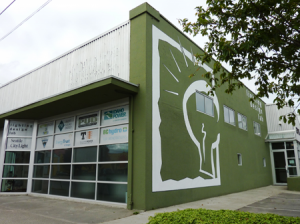
A promising new weapon against light pollution will receive a formal introduction at an event in Seattle Wednesday. Nancy Clanton, a board member of the International Dark-Sky Association (IDA) and member of the Illuminating Engineering Society of North America (IES), will present a workshop about the Model Lighting Ordinance (MLO) at 10 a.m. October 26 at the Lighting Design Lab, located at 2915 Fourth Avenue South in Seattle.

A workshop on the IDA/IES Model Lighting Ordinance
will be held Oct. 26 at the Lighting Design Lab in Seattle.
A task force of the IDA and the IES spent seven years hammering out the details of the model lighting ordinance. It is intended as a guide for environmentally responsible outdoor lighting, and was designed to help municipalities develop outdoor lighting standards that reduce glare, light trespass, and skyglow.

Clanton, who co-chaired the task force, says the process took so long in part because the two organizations started with different sets of goals.

“It wasn’t even a compromise,” she said of the final version of the MLO approved this summer. “We actually blended the goals together and got a really good ordinance that addresses everyone’s concerns.”

The stars aligned to bring this rollout of the MLO to Seattle, according to Scott Kardel, public affairs director for the IDA.

“We’ve chosen Seattle to be the first site partly because Seattle and the Pacific Northwest is a progressive, happening area where people are interested in things like energy conservation,” Kardel said. “Also we have a very active chapter of the IDA, Dark Skies Northwest. It’s a good combination of being able to have our local chapter involved in promoting the event but in an area where we think it has a good chance to have good reception.”

Clanton said the four-hour workshop will give participants a lot of good information about the MLO.

“Here’s what it is, here’s how it was developed, and let us show you some examples of how it could be applied,” was her quick outline of the agenda. “It’s going to be an introduction, answering questions about the different parts of the MLO, and an encouragement for people to bring it to their cities and communities and start looking at adoption.” She noted that the workshop would be useful for city planners as well as for interested advocates who want to learn how to bring better lighting ordinances to their communities.

Clanton said that the city of Plymouth, Minnesota adopted an early version of the Model Lighting Ordinance, which was a big help as they worked through the process. Now Anchorage may be about ready to go to work on adopting the version approved this summer. Both she and Kardel noted that often cities will plow ahead on their own with lighting ordinances, using information from the IDA website, but not telling anyone or availing themselves of the association’s technical expertise. Clanton added that the MLO is not a product that’s ready to adopt off the shelf, but more of a template.

“The model lighting ordinance is supposed to be the technical part of a standard lighting ordinance,” she said, adding that they’ve included placeholder language for intent and the like, but that each community should customize the MLO based on its particular needs. “We had to write this ordinance as if it were a small village or New York City.”

Sky glow is a big deal in Tucson, with Kitt Peak, Mount Lemmon, and Mount Graham observatories in the neighborhood. Kardel said that Tucson, also home base to the IDA, is a prime example for us that lighting ordinances work to curb light pollution.

“We’ve had a big increase in population over the last several decades but have been able to hold on to the level of sky brightness, even with more people and more houses and more lights in the area,” Kardel said. “A good ordinance can do a good job to either hold on to what you have or make things better.”

Clanton gave a shout-out to amateur astronomers for their diligence on these issues.

“The astronomy community has been such a wonderful, vocal voice on light pollution,” she noted. “Without them, I don’t think a lot would have been established. They have been the grass roots in all kinds of light pollution ordinances.”

Cost to attend the workshop is $75 and includes lunch. Sign up here or visit the IDA website for more information.

September 27, 2011

We can READ about the Sun

With old Sol threatening to vanish from Seattle skies until July, we can take some comfort in the fact that we’ll at least be able to read about our life-giving star. Bob Berman’s new book, The Sun’s Heartbeat: And Other Stories from the Life of the Star That Powers Our Planet (Little, Brown & Co., 2011), is here in the nick of time!

Berman is my favorite columnist in Astronomy magazine because of the wry humor he injects into his essays. The book is more of the same: twenty chapters of solid science written in a highly approachable and often humorous way. Even the chapter names are funny. Chapter 11 is titled, “The Sun Brings Death.” Chapter 12 then proclaims, “The Sun Can Save Your Life.” It’s not a contradiction.

The Sun’s Heartbeat is more than just the usual account of stellar formation and life cycle, though that’s all in there, too. Berman includes much about the history of solar science, including interesting tales about how the distance to the Sun was determined and how sunspots were figured out. By coincidence, I was reading the chapter on neutrinos just as the news broke last week that scientists in Switzerland had clocked some of these particles whizzing at faster than the speed of light, much to the chagrin of Einstein’s ghost. The jury is still out on that particular discovery and whether we have to discard the Theory of Relativity.

Berman devotes a good chunk of real estate in Heartbeat to anthropogenic climate forcing, climate change or global warming to most of us, and the Sun’s part in how hot or cool it is on Earth. There’s a great discussion of our current mania for protecting ourselves from all exposure to sunlight, and whether the resultant lack of vitamin D is contributing to maladies such as autism and causing more cancer than the sunblock prevents. It’s quite a dilemma for those of us fair-skinned, freckly, burn-don’t-tan types.

The book is at its most personal and engaging when Berman waxes poetic about his favorite sun-related phenomena. “Nothing outside of a birth or an IRS audit can produce such sobbing or reverential silence like a total solar eclipse or the fabled northern lights,” he writes. He describes beautifully the profound feelings of awe he’s had with every solar eclipse he’s seen, ever since his first in March of 1970 in Virginia Beach. It’s enough to get you to circle the dates now of the next total eclipses that will cross the U.S., on Aug. 21, 2017, and April 8, 2024. The former will be the first such event in the U.S. in 38 years.

The Sun’s Heartbeat is informative and entertaining. Give it a look!

September 5, 2011

Hindsight and Popular Astronomy a good read

For those interested in the history of astronomy, Dr. Alan Whiting’s book Hindsight and Popular Astronomy is an interesting read. Whiting’s premise is simple: let’s take a close look at nine books, aimed generally at a non-scientific audience, published between 1833 and 1944, and written by some of the giants of the science. Let’s see how well they stand up today, and where there are mistakes, see how they happened and how a lay reader might have seen them coming.

While our vision is pretty acute in hindsight, the book is hardy a “gotcha” tome. Whiting is careful to point out that the authors include some of the great thinkers of astronomy, from Sir John Herschel to Sir James Jeans. In fact, he says that most of what Herschel wrote, for example, would stand up well in astronomy texts today. But there were a few whoppers.

The books Whiting examines in Hindsight are:
Each book gets its own chapter in Hindsight. Whiting sets the stage, explains the context in which the book was written, talks about what the author got right, then delves into what went wrong and why. While he leaves out the heavy math, he does sprinkle in a few chapters on basic astronomical observation and calculation, astrophysics, and quanta and relativity, just to get everyone, if not up to speed, exactly, then at least a bit conversant in the new topics the writers had to deal with.

Going back to Herschel’s Treatise on Astronomy, as noted Whiting says Sir John got most of it right, but made some major mistakes in his discussion of Saturn’s rings. Herschel noted that the rings were solid, that an eccentric ring would be stable, that the rings were observed to be eccentric, and that a periodic disturbance would stabilize an otherwise unstable ring. All of these statements are wrong. Whiting notes that the errors come variously from unexamined assumptions, relying on the work of others that contained mathematical errors, and trusting your eyes too much.

Throughout, sometimes even the greatest of the scientists fell into such bad habits of being most willing to believe that which supports his own theory.

While accessible, Hindsight and Popular Astronomy is not exactly a beach read. It’s a scholarly book that’s going make you stop often and think. It also makes me want to read some of the original works Whiting examines. Most are available, largely in reproduction format; the links above go to Amazon pages for such books. Skulking about the library or used book shops may be of some help as well.

Whiting is a professional astronomer and an Honorary Research Associate and Visiting Astronomer with the Astrophysics and Space Research Group at the University of Birmingham in the U.K. He’s also a member of the Seattle Astronomical Society, and can often be found on open house nights at the Theodor Jacobsen Observatory at the University of Washington, or sharing observing insights on Through the Clouds, the SAS Google group.

August 28, 2011

BPAA puts on a good show

The Battle Point Astronomical Association has a great facility on Bainbridge Island and a dedicated and knowledgeable corps of enthusiastic volunteers. The combination adds up to a satisfying visit for stargazers both experienced and new to the hobby. I attended the association’s planetarium show and star party Saturday evening, Aug. 27, and had a marvelous time.

Helix House is home of the Battle Point Astronomical
Association, the Edwin E. Ritchie Telescope, and John H.
Rudolph Planetarium on Bainbridge Island, Washington.
Photo: Greg Scheiderer.
It all happens in Helix House, an old military radio facility in the middle of Battle Point Park on Bainbridge. The House is home to the Edwin E. Ritchie telescope and observatory, the John H. Rudolph planetarium, and association offices, a meeting room, workroom, and library.

Saturday BPAA president Steve Ruhl put on an engaging presentation about killer asteroids. Using the planetarium’s computer system, Ruhl illustrated the rapid increase in the numbers of known asteroids in our solar system, and the crazy orbits some of them take, including a great many whose orbits often cross that of Earth. He noted that a really big asteroid collision with Earth, like the one that wiped out the dinosaurs 65 million years ago, is about a 1-in-65,000,000 year event.

Oh-oh. As Ruhl understated, that would be a bad day. He showed a PG-13 video imagination of such an impact, which would envelop the surface of our planet in flame within a day. That would be most unpleasant. The hope is that, as methods for detecting and tracking asteroids get more sophisticated, we will be able to spot “the big one” with enough advance notice to be able to do something to prevent it.

A couple dozen people attended the presentation. Ruhl used the planetarium in his talk, though noted that it was a little inadequate for the topic. It’s software includes data on about 500 asteroids, a tiny fraction of the more than 30 million such objects now known.

After the planetarium show many visitors climbed the three-story spiral staircase to get a peek through the club’s showcase, the Ritchie telescope, a 27-inch Newtonian reflector club founders built themselves. On this night, the great instrument was pointed at M 13, the great globular cluster in Hercules, a favorite object at star parties. It was an eye-popping view on a perfect night. The weather was marvelously clear, New Moon was just hours away, and the site has good horizons and a fair amount of protection from Seattle’s city lights.

At least half a dozen BPAA members had their telescopes set up for viewing as well, and stargazers of all ages lined up for looks at what was up in the night sky.

For those interested in learning a bit about astronomy, you can’t lose with a visit to Battle Point. Congratulations to the club for running a marvelous outreach effort. Watch Seattle Astronomy for information on their monthly star parties.

August 17, 2011

Stalking planetary nebulae from Seattle

Despite a recent run of decent weather in Seattle, the night skies have often as not been cloudy, thus limiting opportunities for astronomical observations. Thus when the stars aligned last night with crystal clear skies, an evening without work, and a reasonably alert stargazer, I dragged the telescope out into the back yard for the first time in a while to hunt for some planetary nebulae.

The Hubble Space Telescope is a slightly more powerful instrument
than your correspondent's 8-inch Dob located in a light-polluted
 urban back yard. The Saturn Nebula didn't look quite like this
from West Seattle; there was a hint of the color but none
of the detail of the object in this Hubble image.
Photo: STSci, NASA.
The targets, NGC 6818, the Little Gem, and NGC 7009, the Saturn Nebula, were chosen because they’re in prime viewing spots in the southern sky these days, and because they’re among the remaining few objects left to be checked off as I work toward the Astronomical League‘s Urban Observing Club recognition. The clubs are a good way to organize one’s observing. The Urban Club list includes 100 objects, all reputedly visible from light-polluted skies, defined by the club as places where the Milky Way is not visible with the unaided eye. I say “reputedly” because several of the galaxies on the list have been extremely difficult to see from my back yard. But, if it was too easy, what would be the point? View all 100 and you get a nifty pin, and your name is added forever to the club membership rolls.

Last night’s nebulae were both easy to locate but tougher to see. NGC 7009 was easier, spotted very near the star Nu Aquarii in the constellation Aquarius. It appeared in the eyepiece of my 8-inch Dobsonian as a greenish-blue blob, with details such as the “rings” that earned it its nickname visible. Higher power definitely revealed more nebulosity, but washed out the color completely. The Little Gem was a bit tougher, just to the west of a “peace sign” asterism in Sagittarius. A couple of magnitudes dimmer than the Saturn Nebula, NCG 6818 revealed just the slightest hint of color. The moon was not helpful with these objects, as it was just a few days past full and low in the east during the pre-midnight hours during which I was observing.

I visited a few old friends during the evening, including the double cluster and the Ring Nebula, before calling it a night a little before 1 a.m.